
The Method
Europe and Asia run on two operating systems. Most ventures fail at the seam.
The firm exists to close that seam, with a method that comes before the trade show is booked, the market chosen, or the expensive assumption paid for. Three words carry it. Each is a chapter of the same engagement.
Most cross-border ventures are not one project. They are three.
Three layers, one accountability line
Operators usually own one layer. The firm’s principals have worked all three, from the buyer’s side of the table and from the operator’s. The strategic decision and the sourcing system are run end to end; the commercial position is built together with the client’s own team.
Layer 01 ~ the firm leads
Strategic Decision
Which market, why, when. Which joint-venture cut. Which assumption pays back and which does not. Where to invest the time before the capital.
Layer 02 ~ built with the client
Commercial Position
Who buys in the new market, through which channel, at what price. Brand-building and an operating team on the other side.
Layer 03 ~ the firm runs
Sourcing System
Supplier vetting, RFQs, sample audits, quality control, logistics. From intake to delivered goods, with structure rather than improvisation.

Chapter One ~ Before Anything Is Sourced or Built
intention
The direction, stated clearly enough to act on.
Strategic Project Architecture
Most companies carry their direction implicitly and have never put it into a single sentence, and that sentence determines every decision that follows. Establishing it is where each engagement begins: the market, the reason, the timing, and the assumption that has to pay back before capital is committed.
Every venture has an enabler phase. Someone does the groundwork: the strategic search, the supplier validation, the negotiations that hold, the compliance map. None of that is free, and none of it should be priced on success. The enabler phase is paid for at cost; the scale that follows is paid for on performance. Skipping the enabler is the single most expensive optimisation a venture can make.
- Behind “we want to export” usually sit five other questions: validation, pipeline, visibility, a partner, or learning. The trade show solves only some of them.
- Structure before substance: the deal model is agreed before the work starts. Strategy can be revisited; misaligned compensation cannot.
Chapter Two ~ The Work That Is Not Done at a Distance
attention
Finding what the venture actually needs, in person.
Operational Build-Out
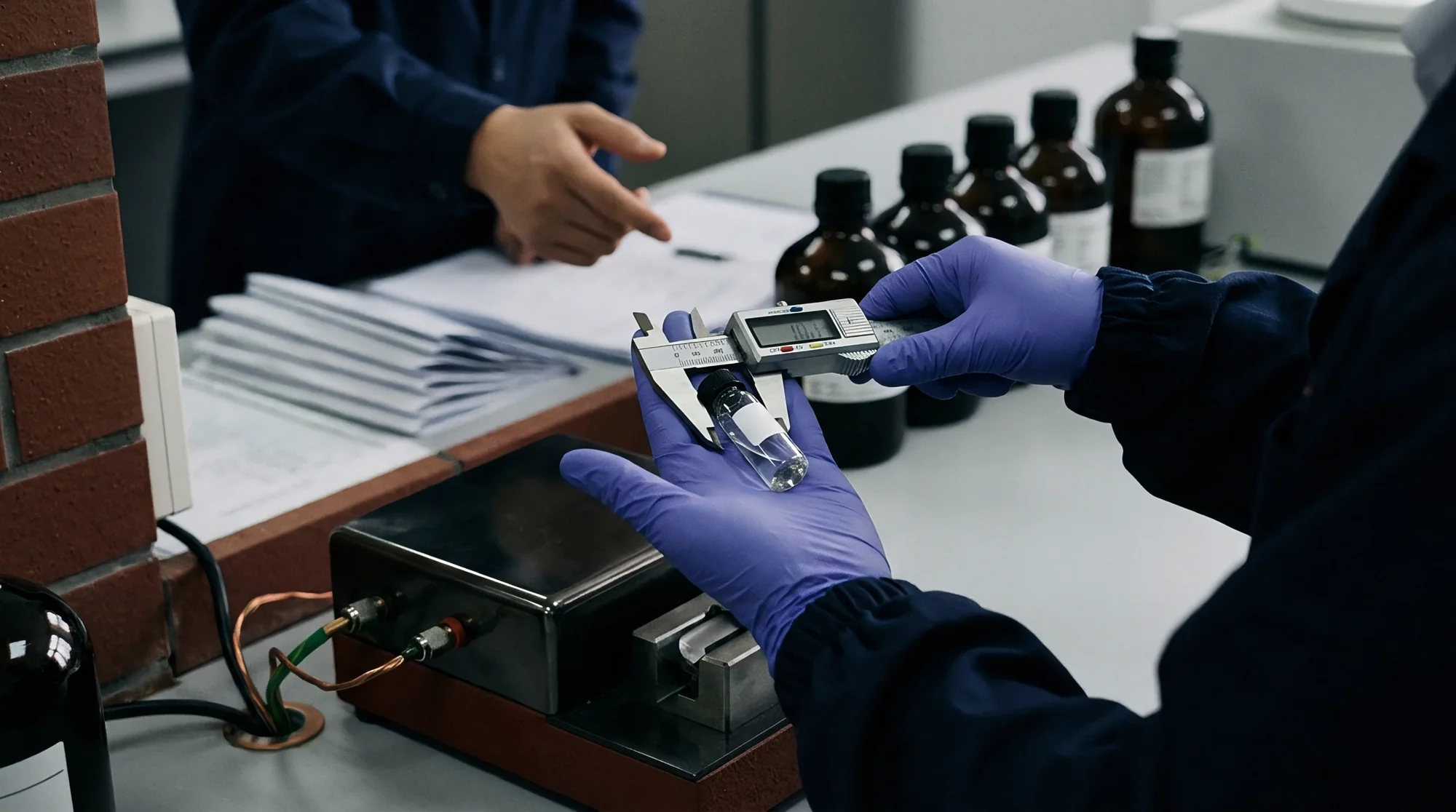
The products, the suppliers, the lines that supplement what is already being sold, and the partners who make the crossing possible. This part depends on being present in both places and on the relationships that only form in person. A factory is not a procurement asset. It is a partner, and the terms hold longer when the relationship was built first. Trust before contract, supplier or client.
Six numbers that survived contact with the market
US market entry
€500k minimum per year
Below that, sales burn faster than learning.
China lead time
18 to 24 months for a serious entry
Trust is built in years, not weeks.
Visitor over desk
3 days at the leading trade show
Beat three weeks of desk research. Nothing replaces it.
Trade-show success
80% happens off the floor
In the six weeks before and the fourteen days after.
DACH sales cycle
9 mo. average B2B cycle
Plan cash for it. Trust before contract takes time.
Follow-up window
48 h after first contact
Later, and you are forgotten. The line is the line.
Chapter Three ~ Holding the Position Once It Is There
retention
A product that arrives once is a shipment. A product that keeps its place is a business.
Active Growth Management
Bringing it to market and holding the position once it is there. The difference is in what is built around the product: the replenishment cadence, the second source mapped before the first order ships, the capacity reserved, the partnership that becomes the operating mode. The firm applies concentrated effort and its own ecosystem to the venture’s commercial momentum after the launch, not only before it.
- Saving cost on every replenishment cycle, from direct manufacturer relationships. The 12 to 22 percent cost-down typical on a first audited order.
- Scaling volume on verified, de-risked supply: a primary and a secondary chain, never one factory, one shipment, one point of failure.
- Full visibility: supplier interactions, pricing breakdowns, mark-up structure and quality data visible to the client in real time.
- Growing together: the partnership becomes the operating mode, with an exit clause either side can use on notice.
Rigorous where the analysis needs to be rigorous. Human where the decisions are made.
Why the name
sentiention is the method: intention, attention, retention. The three words are the process, and the name holds all three. The tagline under every page is the same promise in four words: build on sentient connection. Ventures hold together because the people in them trust one another and understand what they are building, not only because the numbers work.
Expertise is a utility, not a secret. That is why the firm publishes its working knowledge as open reference on fourteen platforms, one per material or market, and why every brief that arrives gets a human feasibility check, answered inside 48 hours.
The three services in full ~ The three people ~ Bring the objective